

Cheer uniform sample approval is the point where a buyer checks a physical garment against the signed design and fit specification. It is not the same as approving an attractive photo. Schools and clubs can use one controlled sample, written observations, and a decision log to reduce misunderstandings before a team-wide production run.
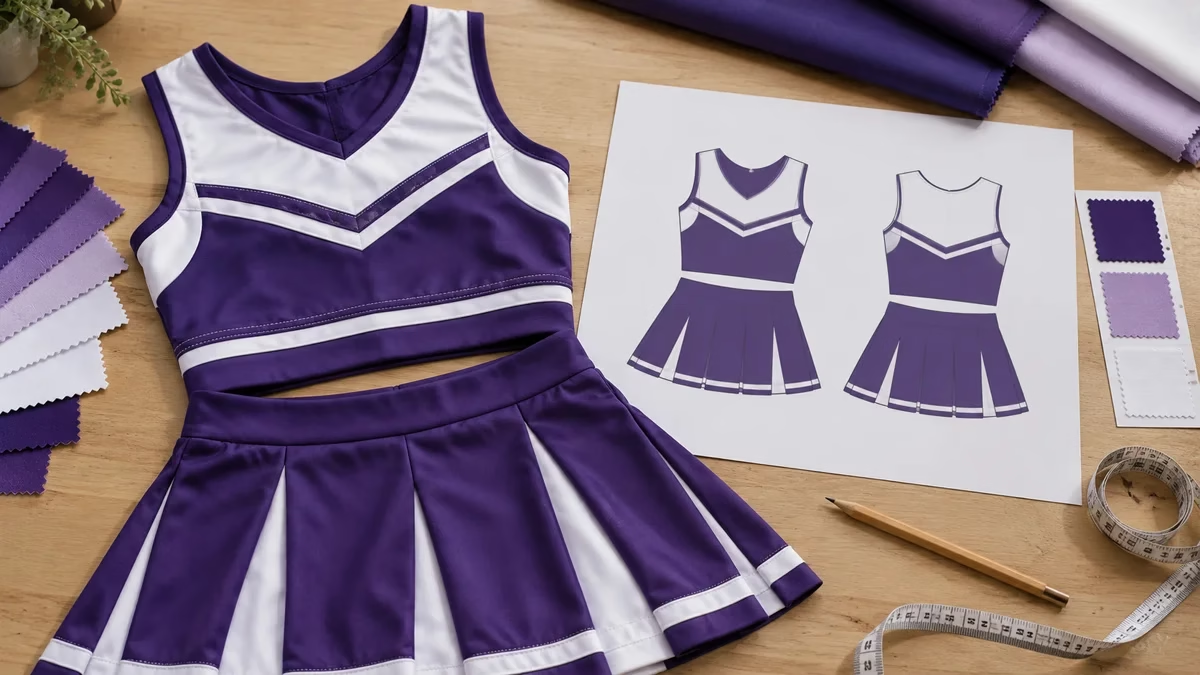
Illustrative image: generic prototype and design sheet; not a NewMe production sample.
Set the baseline before cheer uniform sample approval
Give the reviewer the latest approved artwork, size chart, garment bill of materials, color reference, and requested decoration method. Put a revision ID on the sample record. If the sample reflects an earlier proof, do not approve it by mentally combining it with later email changes. Ask for a new sample or written confirmation of which differences will be corrected in production.
Choose a representative size for the first check, but do not assume one sample predicts every youth and adult size. If the order spans a wide range, discuss whether additional size-set samples or a fit session are needed. Our existing cheer uniform sizing guide explains athlete measurements; this article focuses on accepting a supplier sample.
Inspect the sample in a repeatable order
- Identity: Confirm style, revision, size label, top/bottom pairing, and included components.
- Measurements: Measure key points on a flat garment using the supplier’s measurement method. Record numbers, not merely “fits small.”
- Appearance: Compare panel placement, artwork spelling, decoration location, and front/back balance with the signed proof.
- Kleur: Compare to the agreed physical reference in consistent lighting, especially across different fabrics and trims.
- Construction: Check seam finish, stretch recovery, closures, lining, and any rough edges that contact skin.
- Movement: Have a permitted wearer assess comfort through the actual range of intended cheer movements, without treating the garment as proof of sport-rule compliance.
- Care and labels: Confirm that proposed care instructions and required market labels are addressed in the production specification.
Photograph each observation beside a ruler or color reference where useful. A photo is supporting evidence, not a substitute for measurements. De Pantone color-system explanation notes that materials and production runs can affect appearance; record the agreed comparison standard rather than judging from a phone screen.
Check the garment after a realistic trial, not only while it lies flat. A stretch panel can look smooth on a table yet pull across the shoulders during arm raises. Ask the wearer to report pressure points and any rolling or shifting. Keep safety decisions with qualified coaches and the relevant event rules; this is a fit observation, not a certification. If a test wash is part of the purchase criteria, agree its method and acceptance threshold with the supplier before testing.
Use an acceptance table, not a vague yes/no
| Finding | Example record | Decision |
|---|---|---|
| Matches approved proof | Logo position and size measured against revision B | Accept this element |
| Correctable difference | Hem differs from agreed dimension; supplier confirms adjustment | Conditional approval only if correction is documented |
| Critical uncertainty | Color compared only on screen; no physical standard agreed | Hold approval and request reference or revised sample |
These are hypothetical records, not inspection results from NewMe. Define in advance which deviations need a new physical sample. For a large or high-risk order, ask the supplier what in-process checks and pre-shipment evidence can be provided; do not assume a single sample guarantees every bulk garment.
Record the production release clearly
The approval note should state the sample ID, design revision, size tested, observations, unresolved exceptions, accepted corrections, and name/date of the authorizer. If the buyer says “approved with changes,” list each change and require the supplier to acknowledge it before cutting bulk fabric. Keep the approved sample or a controlled reference available for later comparison.
Voor de VS. apparel, the FTC apparel-labeling overview explains key label topics, while the CPSC clothing guidance addresses flammability requirements. Applicability depends on the product and destination, so confirm requirements with qualified parties. The sample check is a useful place to verify that labeling has an owner, not a substitute for compliance review.
Use the customization process guide for the wider order journey, and the wholesale page when sending the supplier an actual approved specification.
FAQ
Can a digital mockup replace a physical sample?
It can establish layout, but it cannot fully demonstrate garment fit, fabric hand, stitching, opaciteit, or physical color. Decide whether your order risk warrants a sample.
Should we approve a sample with a minor defect?
Only if the correction is specific, measurable, acknowledged in writing, and acceptable under your buying process. Otherwise request a corrected sample.
Does one approved size validate the full size range?
No. Ask how the supplier grades sizes and whether additional fit checks are appropriate for the roster.


