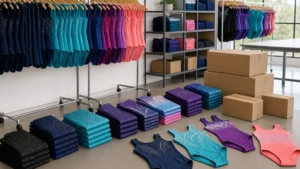


Custom gymnastics leotards turn team colors and performance requirements into a garment that must fit securely through a wide range of movement. A clear process reduces revision time and gives the manufacturer objective approval points.
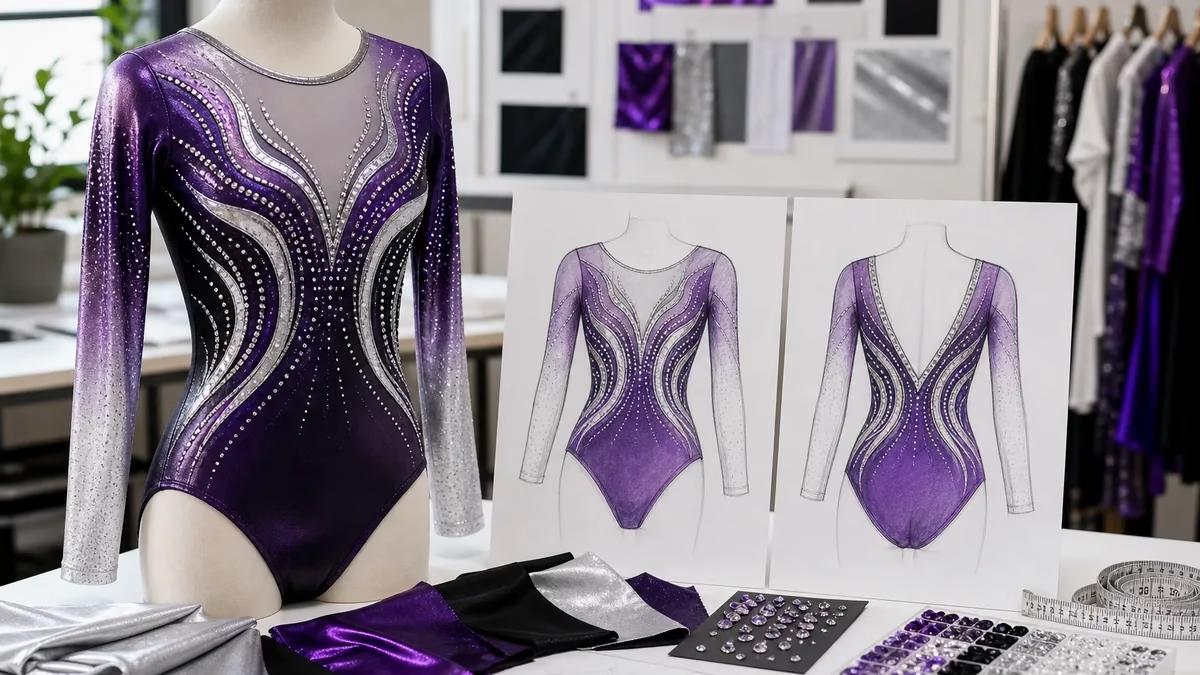
1. Define the program
State whether the leotard is for training, whakataetae, a club range or private-label retail. Include athlete age groups, approximate quantity and target delivery date.
2. Set the design direction
Collect the team logo, colors and a small number of reference images. Describe what you like about each reference instead of asking for a direct copy.
3. Choose the silhouette
Decide on sleeve length, neckline, back treatment and leg line. Confirm applicable program or competition requirements with the relevant governing body.
4. Map fabric zones
Main stretch fabric, mata, lining and printed panels behave differently. Identify where the athlete needs coverage, ventilation, support and maximum flexibility.
5. Select decoration
Sublimation adds printed graphics, while rhinestones, foil and applique add surface effects. Consider flexibility, care, cost and how decoration feels against the body.
6. Supply production artwork
Provide vector logos and defined color references. Ask the manufacturer to show front, back and sleeve views with decoration callouts.
7. Establish the size range
Review the supplier’s measurement method and chart for youth and adult athletes. For private-label products, decide whether the range must align with an existing brand standard.
8. Request a development sample
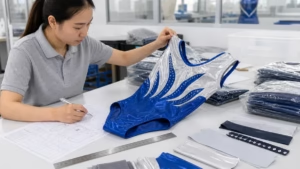
A sample tests the relationship between design and construction. Tirohia te pai, kapinga, totoro, opacity, seam comfort, print alignment and embellishment placement.
9. Conduct a movement test
Have an appropriate athlete test the sample through the movements expected in practice or competition. Record fit observations rather than relying only on photographs.
10. Approve one controlled specification
Combine all approved measurements, rauemi, tae, artwork and packing details in a final specification. Avoid approvals scattered across unrelated messages.
11. Confirm the bulk order
Provide the final quantity by size, labeling information, shipping address and required delivery date. Ask the supplier to confirm the production schedule in writing.
12. Inspect and plan reorders
Check measurements, appearance and packing against the approved standard. Keep the final specification, color references and sample information for consistent reorders.
Information to include in the first inquiry
- Buyer type: club, team, wholesaler or brand
- Training or competition use
- Estimated quantity and size range
- Reference designs and original logo files
- Target price range, if established
- Required delivery date and country
- Private-label and packaging requirements
Competition requirements vary by discipline and event. Clubs can consult the current World Gymnastics rules library and confirm the applicable regulations before approving a competition design.
NewMe develops custom gymnastics leotards for team and B2B orders. Share a design brief through the wharangi whakapā to discuss customization, MOQ, sampling and production.
For custom gymnastics leotards, keep one approved specification with the artwork, inenga, materials and decoration details used for production.
Pātai auau
Can I design my own gymnastics leotard?
Ae. You can start with a sketch or reference direction. The manufacturer should translate it into technical artwork and a sample before bulk production.
Why can the sample color differ from my screen?
Screen calibration and fabric printing affect appearance. Use defined color references and approve a physical sample or strike-off when color is critical.