

When you are choosing custom cheerleading uniforms for your team, the fabric is just as important as the design. The right material affects how uniforms look, feel, and perform — especially during high-energy routines that demand stretching, ジャンプする, and complex formations.
Most cheerleading uniforms fail in one of two ways: they either lose shape after repeated washing, or athletes complain they are too tight, too hot, or restrict movement. Both problems trace back to fabric selection.
In this guide, we will walk you through the fabrics most commonly used in professional cheerleading uniform manufacturing, their strengths, and how to choose the right one for your team.
Why Fabric Matters for Cheerleading Uniforms
Cheerleading is one of the most physically demanding sports. A single routine can include stunts, tumbles, jumps, and dance sequences — all requiring a full range of motion.
The ideal cheerleading uniform fabric must deliver:
- 4-way stretch — complete freedom of movement
- Moisture management — keeps athletes cool and dry
- Shape retention — holds its cut after dozens of washes
- Durability — withstands frequent wear and laundering
- Vibrant color — lasts through sublimation or dye processes
The Most Common Fabrics in Cheerleading Uniform Manufacturing
1. Nylon-Spandex Blend (The Industry Standard)
The vast majority of cheerleading uniforms worldwide are made from a nylon-spandex blend — typically 80% nylon + 20% spandex or 88% nylon + 12% spandex.
Why it is the standard:
| Property | Rating | Details |
|---|---|---|
| Stretch | Five stars | 4-way stretch, recovers perfectly |
| Durability | Five stars | Excellent abrasion and tear resistance |
| Moisture-wicking | Four stars | Dries quickly, keeps skin cool |
| Color vibrancy | Four stars | Takes sublimation and dye exceptionally well |
| Softness | Four stars | Smooth, comfortable against skin |
| Cost | Three stars | Mid-range, excellent value |
Best for: All-star cheer teams, school squads, club uniforms, and competition-ready apparel. This is the fabric most professional cheerleading uniform manufacturers recommend as the default choice.
2. Polyester-Spandex Blend (Sublimation Champion)
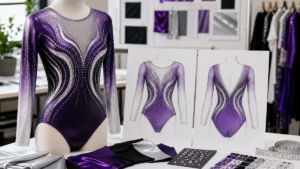
A 92% polyester + 8% spandex blend is the go-to choice when your uniform design involves sublimation printing — the process of embedding vibrant, photo-quality designs directly into fabric fibers.
Why sublimation teams choose polyester:
- Color results are unmatched. Sublimation turns solid dye into gas under high heat (200-220C), bonding color directly into polyester fibers. No cracking, peeling, or fading — ever.
- Design freedom. You can print photorealistic gradients, intricate patterns, and unlimited colors — not just 1-2 screen-print colors.
- Lightweight feel. Polyester-spandex sublimation uniforms feel lighter and cooler than traditionally printed alternatives.
Best for: Teams with complex, multi-color designs. Especially popular among custom cheer uniform buyers from the US, UK, and Australia sourcing from China manufacturers.
Pro tip: A nylon-spandex blend cannot be sublimated. If your design calls for sublimation, always confirm with your manufacturer that the base fabric is polyester-spandex with at least 65% polyester content.
3. 100% Polyester (Economy and Practice Wear)
When budget or practicality is the priority, many teams choose 100% polyester for practice uniforms, sideline wear, or large school groups where cost per unit matters.
Pros: Affordable for large quantities, excellent for sublimation, easy to launder and maintain.
Cons: Less soft than nylon-spandex blends, lower stretch recovery over time, can feel hot in warm environments.
Best for: Practice wear, sideline uniforms, school marching bands, and teams with budget constraints needing high quantities (50-plus units).
4. Mesh and Power Mesh (Breathability Layer)
Mesh fabrics — typically made from polyester or nylon — feature an open-knit structure that allows air to circulate freely. You will often see mesh panels on the sides of cheerleading tops or used as full panels in hot-weather uniforms.
Best for: Added breathability in specific areas. Many custom cheerleading uniform designs incorporate mesh side panels or full-mesh backs for ventilation during intense routines.
5. Tricot and Interlock Knit (Structure and Coverage)
Tricot is a warp-knit fabric with a smooth, fine surface and excellent dimensional stability. It is sometimes used in cheerleading uniforms for its ability to hold a crisp, structured silhouette — particularly in letterman-style jackets or formal parade uniforms.
Best for: School letterman jackets, marching band uniforms, and ceremonial cheer apparel rather than high-performance competition wear.
Key Performance Features to Ask Your Manufacturer About
- Moisture-Wicking Finishes: Pulls sweat away from the skin. Valuable for teams practicing indoors or in warm climates.
- Anti-UV Treatments: Adds sun protection for outdoor events, summer camps, and parades.
- Oeko-Tex Certified Fabrics: Independent testing ensures textiles are free from harmful substances. Essential for school and youth programs.
Fabric Weight: GSM Matters
Fabric weight is measured in GSM (grams per square meter). For cheerleading uniforms, GSM typically ranges from 150 to 220 g/m2:
| GSM Range | Weight | Best Use |
|---|---|---|
| 150-180 GSM | Lightweight | Breathable practice wear, hot climates |
| 180-200 GSM | Mid-weight | Standard competition and practice uniforms |
| 200-220 GSM | Heavyweight | Letterman jackets, structured garments |
Most custom cheerleading uniforms fall in the 180-200 GSM range — the sweet spot between durability and comfort.
How to Order the Right Fabric for Your Team
- Tell them your use case. (Competition, practice, school band, or parade?)
- Share your design. If your design is sublimation-heavy, they will default to polyester-spandex. For rhinestone and embroidery-heavy designs, nylon-spandex may be better.
- Ask about GSM. Confirm the weight feels right for your team.
- Request a fabric swatch. Any reputable manufacturer should offer fabric samples before bulk production.
- Check wash instructions. Get care guidelines to pass on to your team.
Common Mistakes Teams Make When Choosing Fabric
Avoid choosing purely based on price. 100% polyester may be cheaper, but if your athletes are complaining about heat or restricted movement, you will end up replacing them — doubling your cost.
Avoid assuming all spandex is the same. Cheerleading-grade spandex is different from casual wear spandex. Look for 4-way stretch specifically labeled for athletic use.
Avoid skipping the swatch. Never order 50-plus units without first touching and testing the actual fabric. Colors render differently in photos.
Avoid not mentioning care requirements. If your team launders uniforms frequently, ask about fabric durability under repeated washing.
Care Tips for Cheerleading Uniforms
- Wash inside out in cold water on a gentle cycle
- Air dry or tumble dry on low heat — never high heat
- Avoid fabric softener, which can break down elastic fibers over time
- Hang immediately after drying to prevent wrinkles
- Store flat or on padded hangers to maintain the uniform shape
- Check rhinestones and embellishments before each wash — secure any loose stones before laundering
Final Thoughts
Choosing the right fabric for cheerleading uniforms is one of the most impactful decisions you will make as a team manager, coach, or buyer. The nylon-spandex blend remains the gold standard for most teams — offering the perfect balance of stretch, durability, comfort, and color vibrancy.
But if your design calls for sublimation printing, do not compromise — switch to polyester-spandex with a confirmed at least 65% polyester content to ensure print quality.
Still not sure which fabric is right for your team? A good manufacturer will guide you through the decision based on your specific design, budget, and use case.
Ready to design your custom cheerleading uniforms?