


A cheer uniform packing list helps a school or club turn a bulk delivery into complete, athlete-ready sets. Ordering the correct number of tops and skirts is only part of the job: the buyer must also know which size belongs to which athlete, whether optional pieces are included, and how shortages will be reported. This guide covers receiving and distribution rather than design or sizing advice.
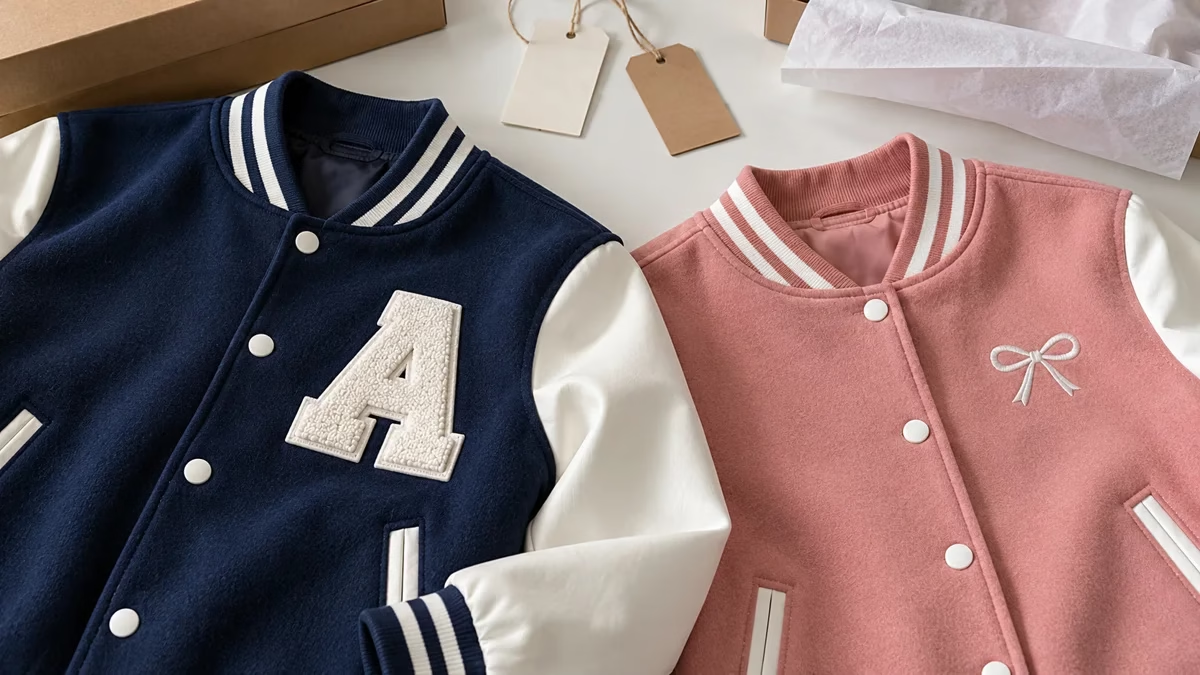
Illustrative image of generic jackets with blank hang tags and packing tissue; not NewMe merchandise or an actual shipment.
Build the cheer uniform packing list from the approved order
Start with the final purchase order and size roster, not an early signup spreadsheet. For each athlete or distribution unit, create an internal set ID and list every expected component: top, bottom, liner, warm-up, bow, jacket, or spare item. Mark optional products clearly. If the supplier packs only by size, tell the receiving team before delivery so volunteers do not assume bags are already personalized.
A simple row might read “Set 07: adult medium top; adult small skirt; one bow; no jacket.” This is a hypothetical format, not a recommended size combination. Keep athlete names off the exterior of cartons if privacy or school policy makes that inappropriate; a numbered code can connect the carton list to a secure roster. Our uniform sizing guide addresses measurement, while this list controls the handoff after quantities are frozen.
Choose a packing method before the order ships
| Method | Good fit | Receiving tradeoff |
|---|---|---|
| By garment and size | Club will assemble sets locally | Fast supplier packing, more local sorting |
| By athlete or set ID | Large roster with varied top/bottom sizes | Less sorting, but roster changes must be controlled |
| By team or location | Distributor serving several clubs | Needs a carton count and contents list per destination |
Ask what the supplier can actually provide and what it costs. Do not assume athlete-level bagging, barcode labels, or multi-address shipping is included. For high-volume logistics, the GS1 logistics-unit explanation describes the standardized SSCC identifier; a small club may simply need clear carton numbers and a human-readable contents list. The appropriate system depends on the buyer’s scale and receiving process.
A receiving check that catches missing pieces
Assign one person to count unopened cartons against the carrier record and photograph visible damage before moving anything. Assign another to compare each carton’s listed contents with the approved order. Use the set ID or size code to tick off tops, bottoms, and accessories. Put an exception in a separate column: missing, extra, damaged, wrong size, or mismatched decoration. Record quantity, carton number, and photos for each exception, then notify the supplier through the agreed channel and deadline.
Do not distribute sets until critical missing-piece questions are resolved, especially if athletes will trade sizes informally. A swap may fix one person’s fit while creating a deficit elsewhere. Keep a signed check-out record for issued sets and a separate inventory of spares. If the order is for resale, reconcile the receiving quantity with the store or school inventory system before listing stock as available.
Plan a second verification at distribution: the athlete or guardian confirms the listed components before leaving. This does not replace the initial carton count, but it catches a wrong-size handoff while the team still has time to correct its records.
Account for labeling and care information
Each garment may need its own relevant labels and care information; an outer bag label is not necessarily a substitute. The FTC apparel-labeling guidance describes requirements for covered U.S. textile products. Confirm which destination-market rules apply and who is responsible for compliance. During receiving, check that a representative set includes the agreed care and identification information, then sample additional units according to your inspection plan.
For future seasons, retain a version-controlled copy of the packing list and record which sets were issued, held, or returned. This makes a later replacement request easier to describe, though it does not guarantee identical color across production runs. For product combination ideas, see our cheer uniform packages article; for a current supply proposal, use the wholesale inquiry page and specify the packing method in writing.
FAQ
Should each athlete receive a separate bag?
Only if athlete-level packing helps your distribution process and the supplier confirms it is available. Size-group packing may be simpler for a small roster.
What should a carton label show?
At minimum, use a clear carton identifier linked to a contents list. More formal identifiers may be appropriate for distributor-scale operations.
When should shortages be reported?
Follow the deadline in the purchase agreement. Count and document discrepancies promptly after receipt so evidence is still clear.


