


Personalized gymnastics leotards are easier to order when every athlete is measured the same way and the buyer records more than a clothing size. A club may have a roster of 30 athletes, but “child medium” from three different brands is not one measurement. This practical form gives a coach or purchasing lead a consistent record before approving a supplier’s size chart. It is a planning tool, not a substitute for the chosen maker’s instructions or a physical fit sample.
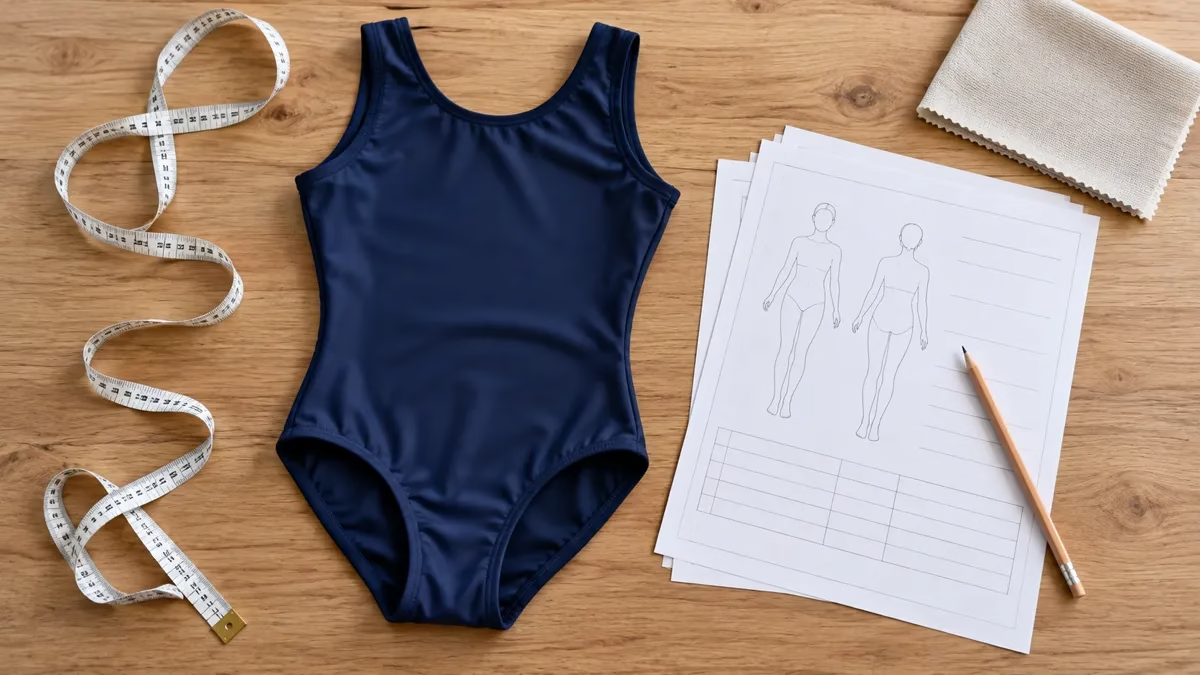
Personalized gymnastics leotards start with one measurement protocol
Choose one trained adult to explain the process, obtain the required parent or athlete consent, and record measurements privately. Use a flexible tape over light, close-fitting practice clothes. Keep it level around the body, neither compressed nor slack. Record the unit—centimeters or inches—on the form and never mix the two. Measure at a consistent point in the season; a measurement from last year is not a safe assumption for a growing athlete.
Capture chest, waist, hip and torso/girth in the exact way required by the supplier’s chart. Torso is especially important for a one-piece garment: it normally follows a loop from shoulder through the legs and back to the starting shoulder, but the start point and path should match the selected chart. GK Elite’s gymnastics size guide illustrates why a brand uses several body measurements, including torso, rather than age or height alone. Its numerical chart is for GK garments; do not copy its size labels into another supplier’s order.
A reusable club measurement form
Create one row per athlete and use an internal athlete ID if a shared sheet would expose names. A simple working layout is below. The entries are examples of fields, not NewMe sizing recommendations.
| Field | What to record | Why it matters |
|---|---|---|
| Athlete ID | Private roster reference | Connects fit feedback without distributing personal data |
| Measurement date and unit | Date; cm or in | Prevents old or mixed-unit data |
| Chest / waist / hip | Body dimensions per supplier guide | Checks circumference fit |
| Torso or girth | Full loop per supplier guide | Checks one-piece length |
| Candidate size | Supplier chart result | Makes the chart choice explicit |
| Sample fit notes | Shoulder, leg opening, movement, comfort | Captures what numbers miss |
| Approved final size | Size after try-on | Locks the purchasing roster |
Keep the measurement worksheet accessible only to people who need it. The factory-facing purchase order normally needs size quantities, not a full named roster or children’s body data. If the buyer sends individual measurements for truly made-to-measure garments, agree on secure transfer and deletion practices with the supplier first.
Move from chart choice to sample fit
After assigning a candidate size, request a relevant size sample or prototype if the supplier offers one. The sample must match the intended pattern closely enough for fit testing. A plain practice leotard from a different cut can be useful as a rough comparison, but it cannot validate a competition design with different sleeves, neckline, lining or decoration. Ask the supplier which fit differences are expected before interpreting the trial.
Have the athlete move through normal, supervised training positions appropriate to the program. Check whether shoulder straps stay in place, the torso pulls uncomfortably, the back coverage remains as intended, and the leg opening shifts. Fit should be judged by comfort, secure coverage and freedom of movement, not by an arbitrary wish to size down for a sleek photo. Write the observed issue beside the candidate size, then ask whether a size change or pattern adjustment is more appropriate.
For a full team, use representative sample sizes and record who tried each size. Do not assume one athlete’s comfort proves the fit for everyone assigned that label. A size chart is a starting decision; sample feedback is the evidence for final approval. See our custom gymnastics leotards overview for the product context and the wholesale sourcing guide for broader supplier questions.
Freeze the version before requesting a quote
Send the supplier a dated, versioned size breakdown: size code, Menge, sample reference and any approved exceptions. Ask them to confirm that their current chart and pattern version are the same ones used for the sample. If a fabric, lining or cut changes, request confirmation that the fit approval still applies. A buyer should also decide who owns late athlete changes and by what date the size list closes. That decision matters more than optimistic guesses about lead time.
For competition garments, the coach should check current event rules separately from fit. USA Gymnastics publishes its women’s program rules and updates; other programs and countries may differ. The supplier can work from your approved brief, but the club remains responsible for identifying the event and its applicable attire requirements.
Frequently Asked Questions
Can we order by age instead of measuring?
Age can help organize a fitting session, but it cannot reliably establish a one-piece leotard’s torso and circumference fit. Use the relevant supplier chart and a sample whenever practical.
Should we send all athlete names to a factory?
Usually a quantity-by-size order is enough. Send personal measurement details only when needed for the agreed customization, through an appropriate private channel.
What if an athlete is between two chart sizes?
Record both candidates, test the closest available samples and discuss the specific fit problem with the supplier. Do not invent a universal “always size up” rule.
Image note: the accompanying visual is a generated illustration of a measurement setup, not a NewMe product photograph. If your club has a finalized roster and a target style, send an inquiry with a size breakdown and your questions about samples.


