

Custom cheer uniform design approval should be a controlled decision, not a chain of screenshots and “looks good” messages. For a school, club, or wholesale buyer, one approved version needs to define the garment, colors, artwork, size range, and authorized signer. The copyable approval template below helps prevent a visually attractive concept from being mistaken for a production-ready specification.
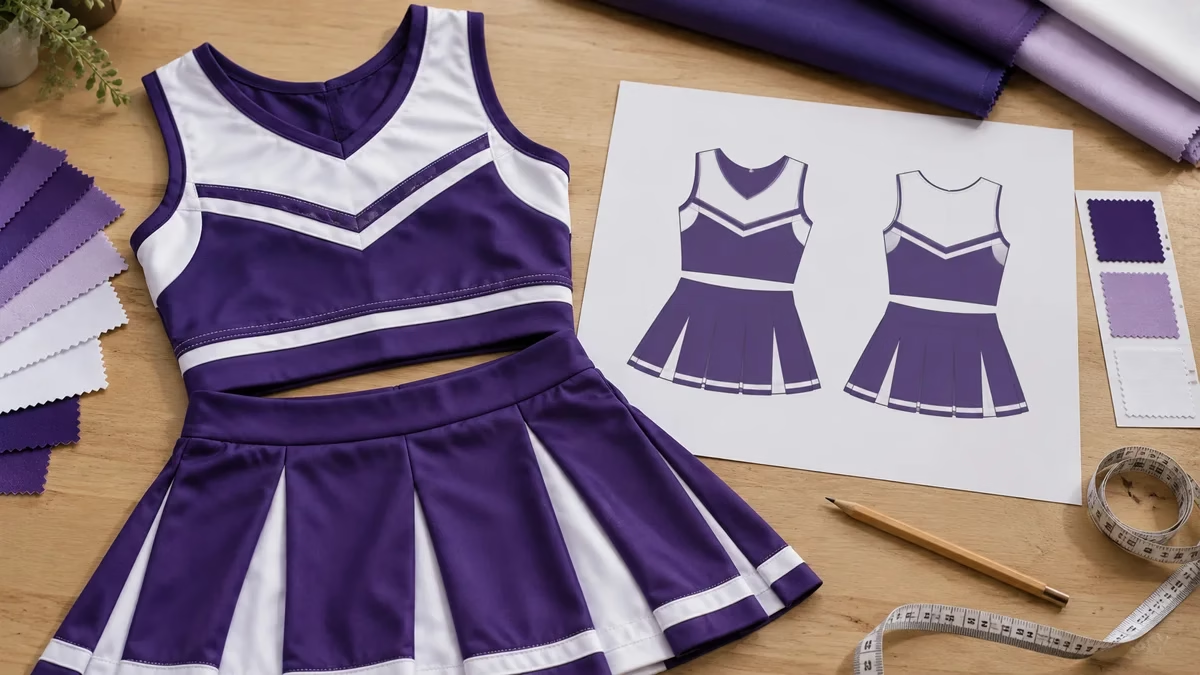
Illustrative image: generic uniform concept and swatches; not an actual NewMe sample or approved design.
Why custom cheer uniform design approval needs one owner
Coaches, athletic directors, parents, and athletes may all comment on a design. Feedback is useful, but a manufacturer needs a single final instruction set. Name one buyer-side decision-maker and one alternate. Set a date after which changes require a revised quote and a new proof. Keep drafts labeled “for review”; only the accepted revision should carry an approval date.
Start with the intended use and rule set. School sideline and all-star competition teams may follow different requirements. The USA Cheer rules overview points buyers to the relevant rule publishers; confirm the current requirements with the applicable school, league, or event organizer. A design proof does not itself establish compliance.
Copyable custom cheer uniform design approval brief
Copy this field list into a shared document or supplier email. Replace every bracket with an explicit answer. If a field does not apply, write “none” rather than leaving it blank:
Project and revision: [team/season] — [revision ID/date].
Approved garment set: [top style, bottom style, optional liner/warm-up].
Use and rules: [sideline, competition, practice; governing body/event].
Size range and quantity: [youth/adult sizes, quantities, fitting basis].
Color standard: [physical swatch or agreed textile reference, plus placement].
Artwork: [file name/version, logo rights, front/back placement, dimensions].
Decoration: [method, stone/embroidery/print locations, finish limits].
Approval evidence: [digital proof ID; physical sample ID if required].
Open exceptions: [none or each item with owner and due date].
Authorized signer: [name, role, date, approval channel].
Send the same revision to everyone approving it. Do not combine the color callout from one version with the placement from another. If the school owns a logo, ask for a properly licensed master file; do not trace artwork from a competitor photograph. The Adobe Illustrator packaging guide explains how linked graphics and file reports can travel with a production handoff. Check font licenses before sharing font files.
What the digital proof can and cannot confirm
A digital proof is useful for layout, spelling, relative proportions, and decoration placement. It cannot fully prove stretch, opacity, feel, stitch quality, or an exact physical color match. Pantone notes that textile color references and physical samples are important because color appearance changes across materials and processes. If the shade is critical, agree on a physical reference and the conditions under which it will be judged.
Ask the supplier to mark any design element that may shift with size grading or seam placement. A logo positioned correctly on an adult medium may not be equally balanced on the smallest youth size. For fit decisions, use the existing uniform sizing guide and request supplier-specific measurement tolerances rather than assuming a universal size chart.
Keep a separate decision log for feedback that was considered but not adopted. For example, if a parent suggests a second sleeve emblem after the budget is fixed, note why the team declined it. This avoids reopening the same question when a different reviewer sees the next proof. The log can be brief; it should preserve the final reasoning and the person authorized to make the call.
Sign off in stages
Stage one approves the design direction: silhouettes, colors, artwork, and decoration approach. Stage two approves a final production proof with size breakdown and item list. Stage three, when required, accepts a physical sample against an agreed checklist. Only then should the buyer release production. A late artwork or quantity change may affect price and delivery, so request a written revision rather than relying on a verbal promise.
This approval record can accompany a quote request through our wholesale cheer uniform page. It does not assume that NewMe offers a particular sample policy, revision count, lead time, or minimum order: those belong in a written supplier response.
FAQ
Who should sign the final design?
Choose the person empowered to place the order and resolve team feedback. Record their name and the exact proof revision they accepted.
Is a screenshot enough to approve color?
No if exact shade matters. Screens and materials render color differently; use an agreed physical swatch or sample for color-critical decisions.
What if the team changes its logo after approval?
Pause the existing proof. Submit the licensed replacement artwork, obtain a revised proof and price or schedule impact, then issue a new dated approval.


