It sounds easy to buy a lot of cheer uniforms, but it’s not once you have to get sizes, compare prices, check fabrics, keep track of deadlines, and make sure everyone on the team looks the same on the first day of wear.
I have always thought that buying uniforms in bulk is less about getting the best deal and more about avoiding costly mistakes. A cheerleading uniform order for a U.S. team needs to work in real life, not just in a model. It needs to fit a variety of athletes well, be able to handle movement, match the team’s branding, get there on time, and still make sense when it’s time to reorder.
That’s why I would never judge a bulk cheer uniform program just by how it looks. I would look at how well it fits, how well the fabric holds up, how well the decorations hold up, how consistent the production is, and how reliable the reorders are.
This guide will help you make a better buying decision whether you are looking for a high school cheer team, an all-star gym, a youth squad, or a college spirit program.
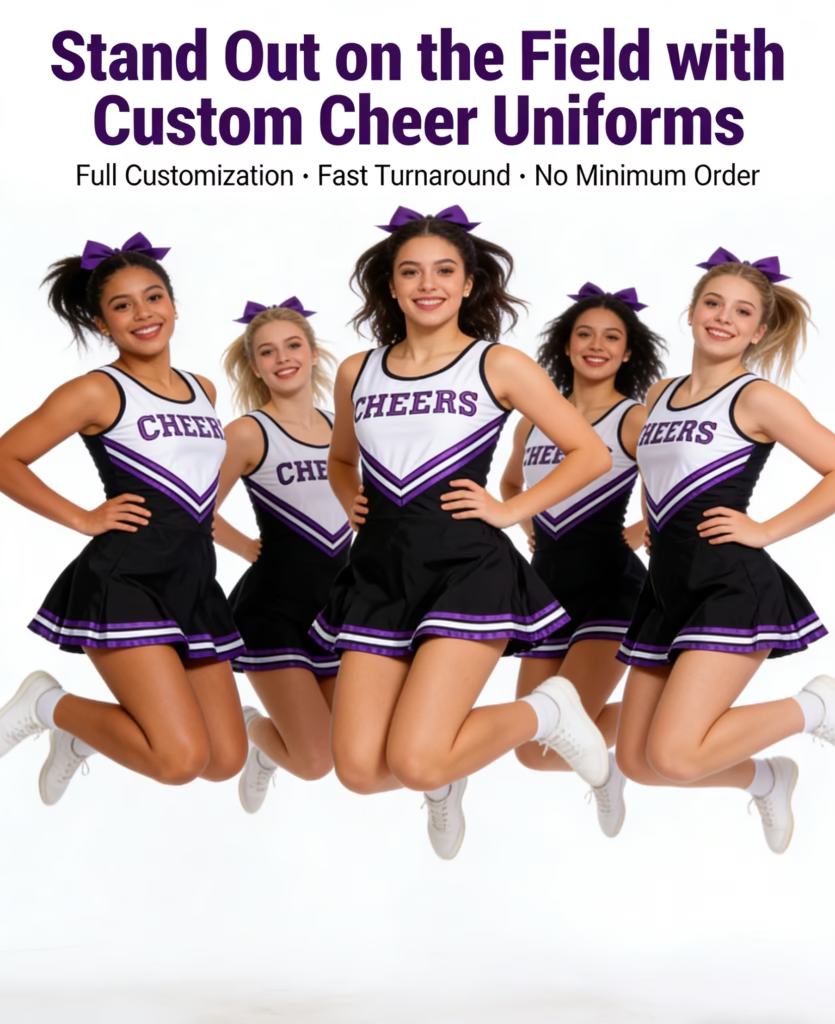
Why You Should Buy Cheer Uniforms in Bulk in a Different Way
A one-piece sample can be forgiving. A bulk order isn’t.
When you order custom cheer uniforms for a whole team, even the smallest problems get worse. A small size difference means that ten athletes need to make changes. Under gym lights, a small difference in color becomes clear. A trim or embellishment that looked great in the sample can become a problem with durability after being worn, washed, traveled with, and used in competitions over and over again.
That’s why buying in bulk should be seen as a production choice, not just a style choice.
The main goal for U.S. teams is not just to buy a lot of uniforms. The goal is to have a uniform program for the team that feels consistent, looks good, and is easy to run without causing too much stress.
Understanding the Different Types of People Who Buy Cheer Uniforms in the U.S.
There are different reasons why each U.S. team buys. That’s why I think it’s best to define the program before comparing designs or manufacturers.
Cheerleading Teams in High School
Most of the time, high school teams need to find a balance between their identity, how long they last, how modest they need to be, and how much money they have. Reorders are also common because athletes graduate, move, or join after the first round of production.
College Spirit Groups
When buying for college, people often care more about branding, sharper presentation, and cleaner finishing details. Uniforms might need to work for games, appearances, events on the sidelines, and media coverage.
Cheerleading Programs for All-Stars
All-star cheer programs tend to put more stress on how well you can fit, how well you can stretch, how good your visual impact is, and how good your embellishments are. Here, the presentation of the competition is usually more important.
Cheer Teams for Kids
Youth cheer programs need to be easier to plan for size, be more forgiving in how they are built, be comfortable to use, and have prices that work for families or community budgets.
Rec and Community Teams
These teams often need custom team uniforms that are easy to order again, cheap, and well-organized.
It depends a lot on which of these groups you are buying for when it comes to the right bulk cheer uniform.
What You Should Know About Ordering Bulk Cheer Uniforms
When I look at big team uniform orders, I usually focus on five practical things first: how well they fit, the fabric, the decoration, the timeline, and how likely they are to be reordered.
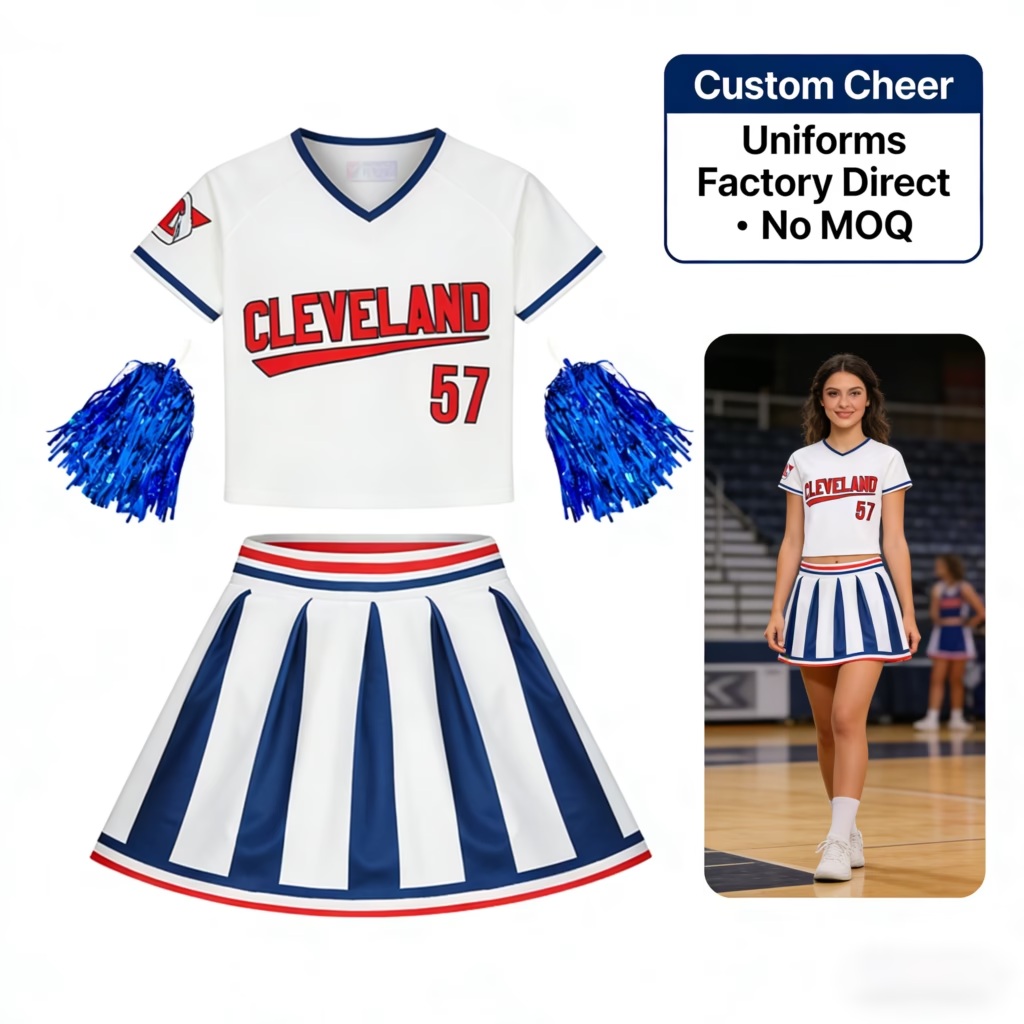
Fit:No matter how good the design looks, the whole order feels wrong if the fit isn’t right. One of the best signs of quality in a bulk uniform program is good sizing.
Material:The fabric affects how comfortable, flexible, confident, and durable the uniforms are, as well as how well they look when worn.
Decorating:Rhinestones, foil, heat transfers, mesh panels, appliqué, and printed graphics all change how things look and how likely they are to break.
Schedule:Late uniforms can make fittings, photos, first performances, and competition prep harder than they need to be.
Reliability of Reorder:A lot of teams spend too much time on the first order and not enough time thinking about what will happen when they need six more uniforms later.
How to Judge the Fabric of Cheer Uniforms
I would carefully test the fabric first in any cheer uniform project because it affects both how the athlete feels and how much the uniform will be worth in the long run.
Stretching and Getting Better
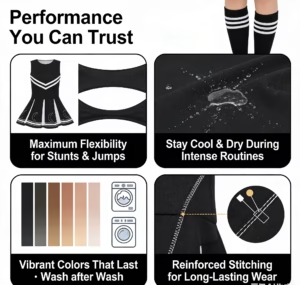
Cheer uniforms should be able to move well while jumping, doing stunts, tumbling, and performing on the sidelines. A fabric that stretches but doesn’t bounce back can lose its clean shape very quickly.
Opacity
This is more important than many first-time buyers think. A sample of a fabric may look fine, but when you move it or put it under bright gym lights, it may act very differently.
Weight and Shape
It can feel tight if the fabric is too heavy. It might feel flimsy or less secure if it is too light. The best choice usually depends on the style, the age group of the athlete, and how they plan to use it.
Ease
The uniform should look like it can be used right away and not feel rough on the skin. During the buying process, comfort is often not given enough thought, especially for youth teams.
Compatibility of Print and Decoration
The base fabric must be able to handle sublimation, printed panels, foil, or layered graphics well if the design uses any of these.
I would always want to see or feel fabric samples before agreeing to make something.
Sublimated vs. decorated cheer uniforms: which is better?
This is one of the most important choices you have to make when you order a lot of things for a team.
Cheerleading uniforms that have been sublimated
Sublimated uniforms are usually a good choice if you want cleaner repeatability, less risk of decoration failure, easier scaling across team sizes, and a more controlled production process.
They can be very helpful for programs that need:
- easier reorders
- lighter uniform builds
- strong color consistency
- graphic-heavy layouts
- lower-maintenance construction
Decorated Cheer Uniforms
Decorated uniforms often create a more traditional competition look, especially when rhinestones, appliqué, mesh, or shine elements are part of the design.
These may be better suited for teams that care most about:
- visual impact
- sparkle and stage presence
- premium competition styling
- stronger embellished finishes
I do not think one approach is automatically better than the other. I think the better question is which one fits the team’s image, budget, lead time, and reorder needs.
Why sizing is more important than most buyers think it is
One of the easiest ways for a bulk order to go wrong is with sizing.
A clean size chart doesn’t mean that the fit will be good. When buying team uniforms, I want to know how youth, junior, and adult sizes are graded, if the fit is tight, how the torso length is handled, and what happens if an athlete is between sizes.
For U.S. teams, this is very important because having players of different sizes makes coaches’ jobs harder and frustrates athletes.
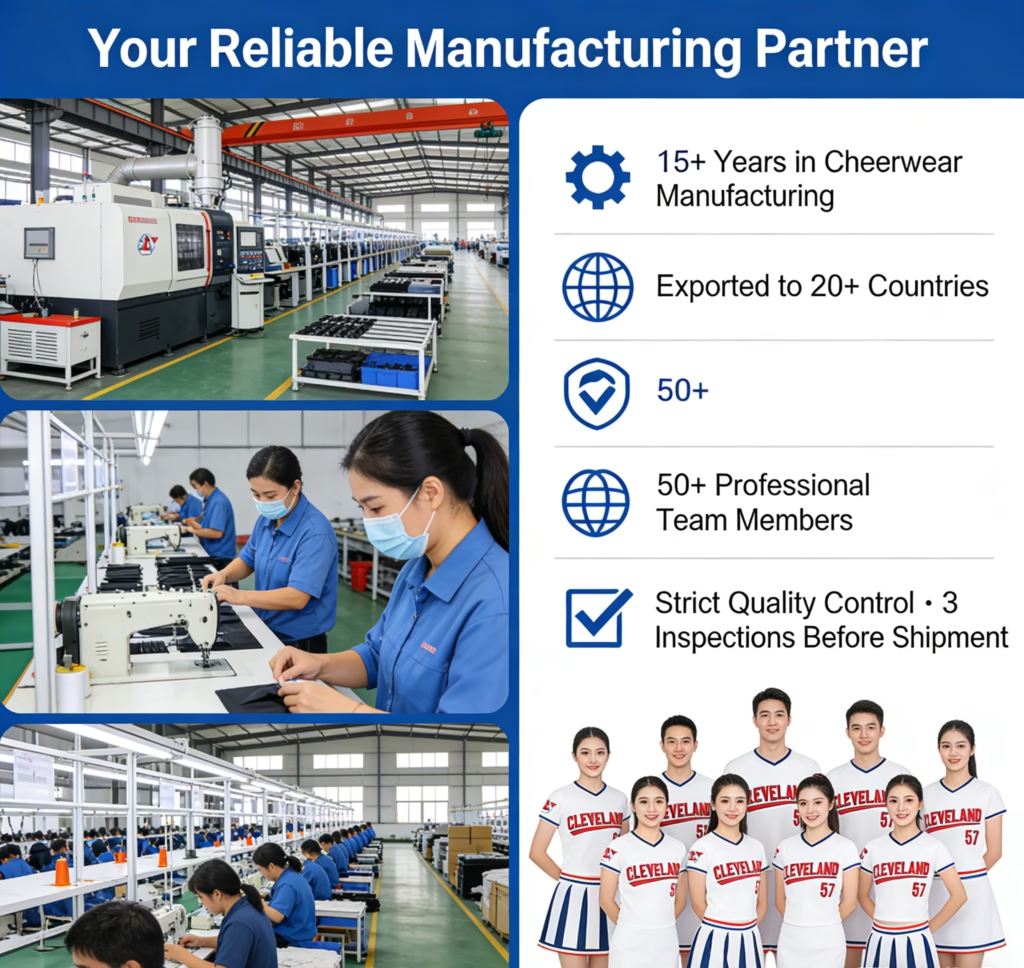
Questions I Would Ask About Sizing
- Do you offer youth, junior, and adult size ranges?
- Is the fit intended to be compressive or more standard?
- Can you provide size samples or a fit kit?
- How should we size athletes who are between measurements?
- Are patterns consistent across reordered styles?
If I were placing a large custom cheer uniform order, I would always prefer to confirm fit before final production rather than solve size problems after delivery.
Custom Design: What Looks Good vs. What Works Well
One of the biggest mistakes people make when buying a lot of custom uniforms is thinking that the most visually interesting design is always the best one.
That isn’t always the case.
Some styles of cheer uniforms look great in a digital picture, but it’s hard to make them look the same across a whole size run. Some look great in one picture, but when you think about how they stretch, where the seams are, how the athlete moves, how well they wash, and how easy they are to reorder, they don’t seem as useful.
A Strong Bulk Design Usually Has These Qualities
- clear team identity
- practical panel construction
- consistent school or gym color use
- manageable decoration placement
- easy movement in performance
- realistic size grading
- repeatability for future orders
The best bulk cheer uniforms usually balance appearance and practicality better than extreme design concepts do.
MOQ and Reorder Planning Matter More Than Many Buyers Realize
A lot of team buyers pay close attention to the opening order and not enough attention to what happens next.
That is risky.
For many school teams and all-star programs, reorders are not optional. New athletes join. A uniform gets damaged. A size needs replacing. A new season starts and a few returning athletes need updated pieces.
That is why I would ask these questions early:
- What is your minimum order quantity for custom cheer uniforms?
- Can we reorder small quantities later?
- Will the same fabric still be available?
- Can you match the same colors in future runs?
- How long will the style stay active?
- Can you reproduce names, logos, trims, and graphics consistently?
A manufacturer that handles the first order well but makes reorders difficult can become a problem very quickly.
Lead Time: Plan Around the Season, Not Just the Quote
This is one of the most common planning mistakes I see in team apparel buying.
A manufacturer may give you a production estimate, but that is only one part of the full timeline. Bulk uniform buying also includes design approval, sizing collection, fit review, sample confirmation, production, finishing, shipping, team distribution, and sometimes last-minute extras or corrections.
A Realistic Buying Timeline Often Includes
- design discussion
- quote revision
- mockup approval
- measurement collection
- fit sample or size set review
- production
- quality check
- shipping
- distribution to athletes
- reorder or replacement buffer
That is why I always think backward from the first required wear date. Teams that need uniforms in early season usually need to make buying decisions much earlier than they first assume.
Price: Compare Total Order Value, Not Just Unit Cost
Unit price matters, but it should never be the only number driving the decision.
A lower-cost cheer uniform can become more expensive if it creates sizing problems, inconsistent decoration, poor durability, or urgent replacement needs.
What I Would Compare Instead of Only Price Per Set
- unit cost
- sample cost
- artwork or development cost
- decoration cost
- shipping cost
- expected durability
- reorder flexibility
- replacement risk
- overall ease of management
For schools and teams, the real cost is not just what you pay upfront. It is also the cost of delays, remakes, stress, and avoidable fixes.
What Quality Control Should Look Like in Team Production
Before confirming a bulk order, I would want clear review points around production quality.
Color Consistency
This is especially important for school colors, gym branding, and future reorder accuracy.
Stitch Quality
A cheer uniform should have clean, stable seams that still work well under movement and stretch.
Decoration Security
If the uniform includes rhinestones, heat transfers, foil, or layered elements, I would want confidence that those details will hold well during season use.
Fit Consistency
A good size run should feel logically graded rather than random from one size to the next.
Construction Balance
Tops, skirts, shorts, liners, and trims should feel like part of one system, not separate items forced together.
Wear Performance
A uniform should still look team-ready after repeated use, not only on first delivery day.
What Makes a Manufacturer Easier to Work With
In bulk buying, I do not think the best manufacturer is always the one with the flashiest catalog.
The better partner is usually the one that can communicate clearly, explain fit and construction choices honestly, manage production details well, and stay organized when the order gets more complex.
The Signs I Look For
- clear communication
- realistic timelines
- good size guidance
- practical customization support
- repeatable production standards
- willingness to discuss reorders
- understanding of seasonal team deadlines
That matters a lot more than polished presentation alone.
Checklist for U.S. Teams Buying Cheer Uniforms in Bulk
I would like these questions to be answered clearly before I sign off on the final order.
- Design:Is the final design good-looking, useful, and possible to make?
- Sizing:Have the team’s measurements been carefully taken and compared to the correct size standard?
- Material:Did the team agree on the main fabric, how much it stretches, and how comfortable it is?
- Decorating:Can you afford the decorations, expect them to last, and need to reorder them?
- Money:Are you looking at the total landed cost instead of just the price at the factory?
- Timeframe:Do you still have enough time to make the uniforms, ship them, and do any extras before you need them?
- Reorder:Can the style be used again later for new athletes or replacements?
- Talking:Is the manufacturer trustworthy enough to handle a real team order without getting confused?
If any of these are still not clear, I would stop and think before moving on.
Conclusion
To put it simply, bulk cheer uniform buying for U.S. teams is not just a matter of buying a lot of them. It is a decision about how well the fit, look, timing, athlete comfort, and smoothness of the start of the season all work together.
Not every company that makes cheer uniforms is good for every kind of project. Some are better for quick orders from school teams. Some look better for high-end competition. Some are better for programs that need to be changed in a practical way, have reliable reorders, and have better long-term management of uniforms.
That’s why I wouldn’t choose just based on how it looks. I would choose based on the kind of team I’m buying for, how much customization I need, and how well I need the whole order to work from approval to delivery.