

When I choose or design an All Star cheerleading uniform, fabric is never just a small detail. It affects how the uniform moves, how long it lasts, how comfortable the athlete feels under pressure, and how confident the team looks on the mat.
All Star cheer is fast, powerful, and highly visual. Athletes tumble, jump, stunt, dance, and perform sharp motions under bright lights. That means the uniform needs to stretch, recover, breathe, and hold its shape through intense routines and repeated wear.
In my experience, the most common materials used in high-performance cheer uniforms include Lycra, Spandex, Mesh, Polyester blends, Nylon blends, and specialty performance fabrics. Each one has its strengths, and the best uniform usually combines several of them instead of relying on one fabric alone.
In this guide, I’ll break down the top materials for All Star cheerleading uniforms, focusing especially on Lycra, Spandex, and Mesh, and how they compare in comfort, durability, breathability, and overall performance.

Why Fabric Choice Matters in All Star Cheerleading Uniforms
Before comparing materials, I always look at what the uniform needs to do during a full routine. A good All Star cheer uniform should:
- Move naturally with the body
- Stretch without feeling restrictive
- Recover its shape after jumps, tumbling, and stunts
- Feel comfortable against the skin
- Allow airflow where athletes need it most
- Resist tearing, pilling, and fading
- Support a polished team appearance
- Hold embellishments such as rhinestones, appliqués, and sublimated designs
A uniform may look beautiful on a hanger, but if the fabric feels stiff, traps heat, or loses shape after a few competitions, it will not perform well for athletes.
That is why I always recommend balancing style with function. The best cheerleading uniform fabrics are not only attractive; they are engineered for movement.
1. Lycra: Best for Stretch, Fit, and Performance Movement
Lycra is one of the most popular materials used in cheerleading uniforms because it offers excellent stretch and recovery. Many people use the terms Lycra and Spandex interchangeably, but Lycra is actually a branded form of spandex/elastane fiber.
What I Like About Lycra
The biggest advantage of Lycra is how well it moves with the athlete. In All Star cheer, athletes need full freedom of motion for toe touches, back handsprings, flyers’ body positions, jumps, and dance sections. Lycra helps the uniform stretch without pulling too tightly across the shoulders, waist, hips, or legs.
I also like Lycra because it has strong shape recovery. After the fabric stretches, it tends to return to its original form. This matters because a cheer uniform should stay sleek and fitted throughout the routine, not become loose or baggy after repeated motion.
Comfort Level
Lycra is usually very comfortable when blended with the right base fabric. It gives the uniform a smooth, flexible feel and reduces the stiff sensation that some traditional uniform fabrics can have.
For athletes who perform long competition days, comfort is a major advantage. A Lycra-blend uniform can feel more like activewear than a rigid costume, which is exactly what many modern cheer teams prefer.
Durability
Lycra performs well when it is used in a quality fabric blend, but it still needs proper care. Excessive heat, harsh detergents, and rough washing can weaken the stretch fibers over time. For that reason, I always suggest washing Lycra cheer uniforms gently and air drying them when possible.
Breathability
Lycra itself is known more for stretch than breathability. If the uniform uses a heavy Lycra blend without ventilation panels, it may feel warm during intense routines. However, when Lycra is combined with breathable mesh or moisture-wicking polyester, the comfort level improves significantly.
Pros of Lycra
- Excellent stretch and flexibility
- Strong shape recovery
- Smooth and fitted appearance
- Great for high-movement routines
- Comfortable for modern athletic uniform designs
Cons of Lycra
- Can trap heat if used in thick fabric
- Requires careful washing
- May lose elasticity over time with poor care
- Usually works best when blended with other performance fabrics
Best Use in Cheer Uniforms:I prefer Lycra for fitted bodices, sleeves, skirts, shorts, and areas where athletes need maximum movement. It is especially useful for competitive All Star cheer uniforms that require a sleek, athletic fit.
2. Spandex: Best for Flexibility and Body-Hugging Fit
Spandex is one of the most important fibers in cheerleading apparel. It is highly elastic and is often blended with polyester, nylon, or other synthetic fibers to create flexible performance fabric.
In the United States, “spandex” is the common term. In many European markets, the same type of fiber may be called elastane.
What I Like About Spandex
The main benefit of spandex is freedom of movement. Cheerleaders need uniforms that can stretch in multiple directions, especially during tumbling, jumps, and stunts. A fabric with spandex allows athletes to move without feeling like the garment is fighting against them.
I also like that spandex helps create a clean, body-contoured look. All Star cheer uniforms are designed to be sharp and performance-ready, and spandex helps maintain that fitted silhouette.
Comfort Level
Spandex can be very comfortable when the fabric blend is balanced. Too little spandex may make the uniform feel restrictive. Too much spandex, especially in a dense fabric, may feel tight or less breathable.
For most cheer uniforms, the goal is not to use spandex alone. The best results usually come from blending spandex with polyester or nylon so the fabric has both structure and stretch.
Durability
Spandex adds flexibility, but it is not indestructible. Over time, repeated stretching, sweat, heat, and improper washing can affect elasticity. High-quality spandex blends generally hold up better than cheaper alternatives.
For All Star programs that compete often, I recommend choosing a premium stretch blend instead of the lowest-cost option. The difference can show after multiple washes and performances.
Breathability
Spandex is not the most breathable material by itself. Breathability depends heavily on the fabric blend, weight, knit structure, and uniform design. If a spandex blend is too thick, athletes may overheat. If it is combined with mesh panels or moisture-wicking fibers, it can feel much more comfortable.
Pros of Spandex
- Excellent stretch
- Supports athletic movement
- Helps uniforms keep a fitted shape
- Works well in modern cheer designs
- Flexible for tumbling, jumps, and dance
Cons of Spandex
- Can feel hot in heavy blends
- May lose elasticity with poor care
- Usually needs to be blended with other fibers
- Lower-quality spandex can stretch out faster
Best Use in Cheer Uniforms
I like spandex in bodices, sleeves, shorts, skirts, and fitted performance pieces. It is ideal anywhere the athlete needs mobility, but it should be paired with breathable construction for maximum comfort.
3. Mesh: Best for Breathability and Style Details
Mesh is one of my favorite materials for adding breathability and visual impact to All Star cheerleading uniforms. It can be used in sleeves, back panels, neckline accents, waist inserts, and decorative overlays.
Mesh is not usually the main structural fabric of the uniform. Instead, it works best as a supporting fabric that improves airflow and adds design interest.
What I Like About Mesh
The biggest advantage of mesh is ventilation. Cheer routines are physically demanding, and athletes can get hot quickly under competition lights. Mesh panels allow more airflow, which can help the uniform feel cooler and lighter.
Mesh also gives designers more creative freedom. It can create the illusion of cutouts while still providing coverage. This is especially useful for teams that want a modern, stylish look while staying within event guidelines.
Comfort Level
Soft stretch mesh can feel very comfortable when placed correctly. I prefer mesh in areas where the body naturally heats up, such as the upper back, shoulders, sleeves, and side panels.
However, mesh quality matters. Low-quality mesh can feel scratchy, stiff, or fragile. For cheer uniforms, I would always choose a smooth, athletic-grade stretch mesh rather than a rough decorative mesh.
Durability
Mesh can be durable, but it is generally more delicate than solid Lycra or polyester-spandex fabric. It may snag on rhinestones, Velcro, jewelry, or rough surfaces. That means placement is important.
For high-contact areas, such as where bases grip flyers, I would avoid using fragile mesh as the main fabric. Instead, I would use it as an accent in lower-stress zones.
Breathability
This is where mesh performs best. Compared with dense stretch fabrics, mesh allows more air movement. It is one of the best choices for improving breathability in cheerleading uniforms.
Pros of Mesh
- Excellent breathability
- Lightweight feel
- Adds stylish design details
- Great for illusion panels and sleeves
- Helps reduce heat buildup
Cons of Mesh
- Can snag more easily than solid fabric
- May be less durable in high-stress areas
- Quality varies widely
- Some mesh can feel scratchy if poorly made
Best Use in Cheer Uniforms:I recommend mesh for sleeves, shoulders, back panels, neckline details, side inserts, and decorative overlays. It works best when combined with stronger stretch fabrics rather than used as the main body fabric.
4. Polyester Blends: Best for Color, Structure, and Sublimation
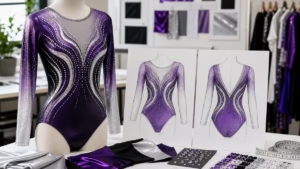
Polyester is another common material in All Star cheerleading uniforms, especially for sublimated designs. Sublimation printing allows teams to create bold colors, gradients, patterns, logos, and custom graphics directly on the fabric.
What I Like About Polyester
Polyester is strong, lightweight, and color-friendly. It holds printed designs well and is often more resistant to shrinking than natural fibers. For teams that want bright, detailed, custom uniforms, polyester blends are a practical choice.
When polyester is blended with spandex, the fabric becomes more flexible and performance-ready.
Comfort Level
Modern polyester blends can be comfortable, especially when they include stretch and moisture-wicking features. However, basic polyester without stretch may feel less flexible than Lycra or spandex blends.
Durability
Polyester is usually durable and easy to maintain. It resists wrinkles and holds color well, which is important for teams that want uniforms to look sharp throughout the season.
Breathability
Polyester can vary in breathability. Some performance polyester fabrics are designed to wick moisture and dry quickly, while cheaper versions may feel hot or less breathable. Fabric weight and construction make a big difference.
Best Use in Cheer Uniforms:I like polyester-spandex blends for sublimated uniforms, team graphics, skirts, tops, and practice wear-inspired competition styles.
5. Nylon Blends: Best for Smooth Feel and Strength
Nylon is often used in activewear because it has a smooth hand feel and good strength. In cheer uniforms, nylon blends can provide a sleek look and comfortable fit.
What I Like About Nylon
Nylon feels soft and smooth against the skin. It can also be strong and abrasion-resistant, which is helpful for athletic apparel. When blended with spandex, nylon can create a premium stretch fabric with a polished finish.
Comfort Level
Nylon blends often feel softer than basic polyester blends. This can be a good option for teams that prioritize comfort and a luxury feel.
Durability
Nylon is generally durable, but it can be sensitive to heat. Like Lycra and spandex, it should be washed and dried carefully.
Breathability
Nylon may not always be as breathable as mesh or advanced moisture-wicking polyester, but lightweight nylon-spandex blends can still feel comfortable for performance wear.
Best Use in Cheer Uniforms:I recommend nylon-spandex blends for sleek bodices, fitted sleeves, and premium uniform pieces where softness and stretch are priorities.
Lycra vs. Spandex vs. Mesh: Which One Is Best?
I do not think there is one single “best” material for every All Star cheerleading uniform. The best choice depends on the team’s routine, climate, budget, design style, and competition needs.

Here is how I compare the three most important materials:
- Lycra:Best for stretch, recovery, and a smooth fitted look. I would choose Lycra when the uniform needs to move like athletic performance wear.
- Spandex:Best for flexibility and body-hugging fit. I would choose spandex as part of a blend when athletes need full mobility and the uniform needs to maintain its shape.
- Mesh: Best for breathability and design accents. I would choose mesh for ventilation panels, sleeves, and illusion details, but not as the main support fabric in high-stress areas.
- In most cases, my ideal All Star cheer uniform would use a Lycra or polyester-spandex base with mesh accents. This gives the uniform stretch, structure, comfort, and airflow at the same time.
Comfort: What Athletes Feel During Performance
Comfort is one of the most important factors in cheer uniform fabric selection. A uniform that looks amazing but distracts the athlete is not a good choice.
When I evaluate comfort, I look at:
- Stretch in the shoulders and hips
- Softness against the skin
- Breathability during long wear
- Seam placement
- Fabric weight
- Moisture management
- Whether the uniform restricts tumbling or stunting
Lycra and spandex blends usually win for movement comfort. Mesh wins for airflow. Polyester-spandex blends often provide a strong balance between comfort, durability, and design flexibility.
For younger athletes, I would pay extra attention to softness and fit. For senior-level teams with more intense skills, I would focus on stretch recovery, durability, and secure construction.
Durability: What Holds Up Best Over a Season?
All Star cheer uniforms go through a lot. They are worn at competitions, showcases, travel days, photo shoots, and sometimes practices. They also need to survive washing, packing, stretching, and repeated movement.
For durability, I usually rank fabrics this way:
- Polyester-spandex blends
- Nylon-spandex blends
- High-quality Lycra blends
- Athletic-grade mesh
- Decorative or fashion mesh
Mesh is useful, but it needs careful placement because it can snag. Lycra and spandex offer excellent performance, but their lifespan depends on fabric quality and care. Polyester blends are often strong choices for teams that need color stability and long-term wear.
To extend the life of a cheer uniform, I recommend washing it inside out, using cold water, avoiding bleach, skipping high-heat drying, and storing it away from rough accessories.
Breathability: What Keeps Athletes Cooler?
Breathability is especially important for teams competing in warm venues or wearing long-sleeve uniforms. Heavy fabrics can trap heat, while breathable construction helps athletes feel more comfortable.
For breathability, mesh is the clear winner. It allows airflow and reduces the heavy feeling that can come from dense stretch fabrics.
However, mesh alone is not enough. The entire uniform design should support comfort. I like to combine breathable mesh panels with moisture-wicking polyester-spandex or lightweight Lycra blends.
Good breathable zones include:
- Upper back
- Underarms
- Sleeves
- Side panels
- Neckline areas
- Shoulder inserts
A smart fabric layout can make a uniform feel much cooler without sacrificing style.
What Fabric Should You Choose for Custom All Star Cheer Uniforms?
If I were choosing materials for a custom All Star cheerleading uniform, I would not pick only one fabric. I would build the uniform strategically.
For the main body, I would choose a high-quality stretch fabric such as Lycra, polyester-spandex, or nylon-spandex. For ventilation and style, I would add soft athletic mesh. For printed graphics, I would use sublimated polyester-spandex. For premium fit, I would make sure the fabric has strong stretch recovery.
My preferred combination would be:
- Polyester-spandex or Lycra blend for the bodice
- Spandex blend for fitted movement areas
- Mesh for sleeves, back panels, or illusion accents
- Reinforced stitching in high-stress zones
- Smooth lining where comfort and coverage are needed
This combination gives the uniform a strong balance of comfort, durability, breathability, and performance.
Final Thoughts
The best materials for All Star cheerleading uniforms are the ones that support athletes while helping the team look confident and competition-ready. Lycra, Spandex, and Mesh each bring something valuable to the design.
Lycra offers stretch, recovery, and a smooth athletic fit. Spandex adds flexibility and movement. Mesh improves breathability and creates stylish visual details. Polyester and nylon blends add strength, structure, color performance, and long-term wearability.
In my opinion, the strongest cheer uniforms are made from smart fabric combinations. A well-designed uniform should never force athletes to choose between comfort and style. With the right materials, a team can have both: a uniform that looks sharp, feels comfortable, and performs under pressure from warmups to final awards.